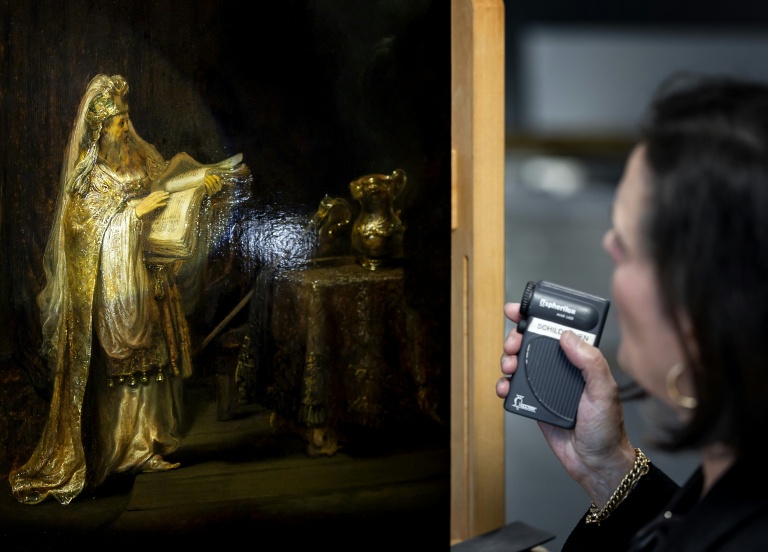
Rijksmuseum Confirms a Lost Masterpiece: "The Vision of Zacharias" Declared a Genuine Rembrandt Painting
In a thrilling announcement that reverberated through the art world, the prestigious Rijksmuseum in Amsterdam has officially confirmed the authenticity of a painting previously dismissed as merely from Rembrandt’s workshop. The captivating work, titled "The Vision of Zacharias in the Temple" (1633), has now been unequivocally declared an echtes Rembrandt Gemälde – a genuine Rembrandt painting – after decades of obscurity and doubt. This extraordinary re-attribution not only adds a new entry to the master's oeuvre but also highlights the pivotal role of cutting-edge technology in deciphering the secrets of Old Masters.
A Masterpiece Lost and Found: The Saga of "The Vision of Zacharias"
The story of "The Vision of Zacharias in the Temple" is as dramatic as the biblical scene it depicts. Painted in 1633 when Rembrandt van Rijn was just 27, the artwork vividly portrays the high priest Zacharias in dark, dramatic tones, receiving the momentous prophecy from the Archangel Gabriel: the birth of his son, John the Baptist. As was characteristic of his work at the time, Rembrandt had even adorned the canvas with his signature, a seemingly irrefutable mark of his hand.
Despite this clear signature, the painting's journey into obscurity began in 1960. At that time, art experts reviewed the work and, in a critical judgment, declared it to be a product of Rembrandt's bustling workshop, but not an original creation by the master himself. This reclassification had profound implications; suddenly, the art world's interest waned, and the painting slipped out of public view, eventually sold to a private individual. For decades, its whereabouts and ownership remained largely unknown, a forgotten chapter in art history.
The painting's re-emergence began approximately three years ago when its current owner contacted the Rijksmuseum, seeking to uncover more about its provenance and history. This outreach provided an unprecedented opportunity for the museum's experts to revisit the long-lost work, armed with advancements in art authentication science that were unimaginable in 1960.
The Cutting Edge of Art Authentication: How Modern Science Confirmed an Echtes Rembrandt Gemälde
The re-examination of "The Vision of Zacharias in the Temple" by the Rijksmuseum's team was a testament to the transformative power of modern scientific analysis in art historical research. Unlike the experts of the 1960s, today's conservators and scientists can peer beneath the surface of a painting with incredible precision. They can analyze paint layers, identify specific pigments, and even uncover hidden sketches and modifications that lie beneath the visible oil paints. These techniques offer an unparalleled window into an artist's process, choices, and even his subconscious corrections.
Crucially, the Rijksmuseum team brought a wealth of fresh knowledge and experience gained from their multi-year, monumental research project known as "Operation Night Watch." This ambitious undertaking involved an unprecedented, in-depth study of Rembrandt's globally celebrated masterpiece, "The Night Watch." During this project, researchers employed specialized scanners and imaging technologies to reveal intricate details, such as underdrawings and preliminary sketches that Rembrandt had made but ultimately painted over. For instance, they discovered a sword that Rembrandt had initially sketched in deeper layers but decided not to include in the final surface composition. This kind of granular insight into Rembrandt's working methods, brushwork, and material choices proved invaluable.
Applying these advanced methodologies and the specific insights gleaned from "Operation Night Watch" to "The Vision of Zacharias in the Temple," the experts meticulously scrutinized every aspect of the painting. Their findings were conclusive: from the composition of the paint pigments to the distinctive application of various techniques, there were overwhelming similarities and direct correlations with other confirmed works by Rembrandt from the same period. The evidence left no room for doubt.
Museum Director Taco Dibbits affirmed the findings with conviction, stating, "It is undoubtedly a genuine Rembrandt." This declaration marks the successful culmination of a meticulous investigation and definitively re-establishes "The Vision of Zacharias in the Temple" as an echtes Rembrandt Gemälde. For a deeper dive into the scientific methods used, you can explore How Modern Tech Confirmed an Authentic Rembrandt Painting.
Why Authenticity Matters: The Impact of a New Authentic Rembrandt
The journey of "The Vision of Zacharias in the Temple" from attribution to doubt and back to full authentication is not unique in the world of Old Masters. The authentication of historical artworks, particularly those by prolific and influential artists like Rembrandt, is often a complex and evolving process. For example, "Landscape with Arch Bridge" faced a similar trajectory, being dismissed as a forgery in the 1920s only to be recognized as an original nearly a century later. This "back and forth" dynamic underscores the inherent challenges and the critical importance of rigorous, scientifically informed authentication, especially when confirming an echtes Rembrandt Gemälde.
Beyond the excitement of discovery, the re-confirmation of this painting holds immense significance for art historical scholarship. While art experts note that demand for Old Masters currently might be comparatively lower than for contemporary art, the addition of a new, authenticated Rembrandt is invaluable. It fills a crucial gap in art historical research, providing not only artistic insights into Rembrandt's creative output in 1633 but also offering a biographical puzzle piece that enriches our understanding of the artist's life and development. This work allows scholars to trace his evolution, influences, and thematic interests more comprehensively.
The Rijksmuseum's role in this discovery is also noteworthy. As a leading institution dedicated to Dutch art and history, its commitment to uncovering and preserving cultural heritage is paramount. By undertaking such detailed research, museums not only enrich their collections but also contribute invaluable knowledge to the global academic community and the general public. Discover more about the painting's historical journey in From Doubt to Masterpiece: The Real Rembrandt Zacharias.
Visiting the Newly Confirmed Masterpiece
For those eager to witness this newly confirmed masterpiece, the good news is that "The Vision of Zacharias in the Temple" is now accessible to the public. The painting's owner has generously provided it to the Rijksmuseum as a permanent loan. It will be proudly exhibited at the museum, starting this week from March 4th. This offers a unique opportunity for art enthusiasts, scholars, and curious visitors alike to stand before an artwork that has journeyed through centuries, across private collections, and through intense scientific scrutiny, emerging finally as a testament to Rembrandt's enduring genius.
The discovery of this echtes Rembrandt Gemälde serves as a powerful reminder that even after centuries, the art world continues to reveal its secrets. It underscores the incredible fusion of art history, connoisseurship, and modern scientific innovation in continually rewriting and enriching our understanding of the past. "The Vision of Zacharias in the Temple" is more than just a painting; it's a story of perseverance, scientific triumph, and the undiminished allure of a true master.